Child Care is Foundational
Living in a resort community is unique, and so is our workforce. Our workforce is dominated by workers who have to be physically present to perform their role: nurses covering an extra shift, snowplow drivers clearing our roads, school teachers teaching our children, chefs and servers feeding our residents and guests, hotel cleaning staff fueling our hospitality industry, and more. For parents in these foundational jobs, access to high-quality care and education for their children is essential.
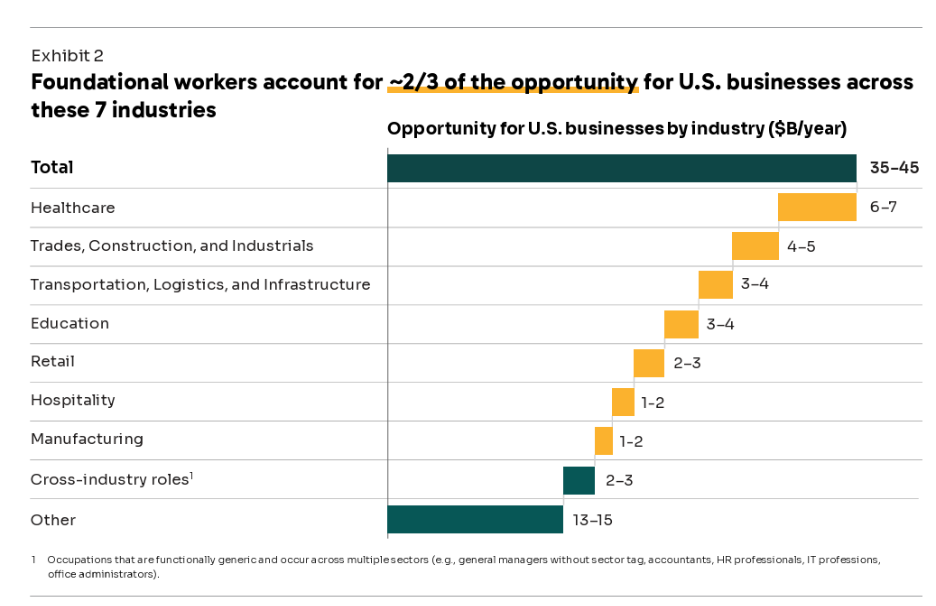
An analysis from Moms First, developed with research support from McKinsey & Company, estimates that child care instability costs U.S. businesses up to $70 billion a year in lost workforce output. About 60% of that — $35–45 billion — falls on what the report calls the “foundational workforce”: workers in shift-based, operationally essential roles where an absence has an immediate, visible impact.
Since our local workforce is so foundational, Summit County’ economy is uniquely positioned to benefit from access to childcare and education.
Using Utah Department of Workforce Services employment-by-sector data for Summit County and applying the national report’s occupational framework (which industries and roles count as “foundational”) to each local sector, the local impact is significant:
Figure: Estimated foundational workers by sector in Summit County.
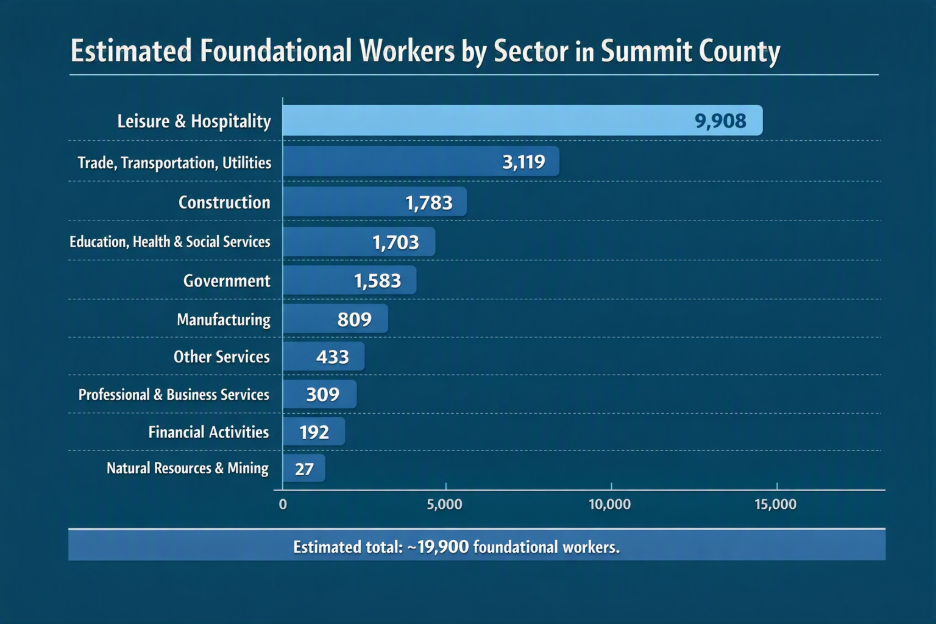
That’s an estimated 63% of Summit County’s workforce — roughly 19,900 people — in roles where a child care breakdown means an immediate, visible gap: a missed shift at the hospital, an unstaffed lift, an empty server station on a Friday night.
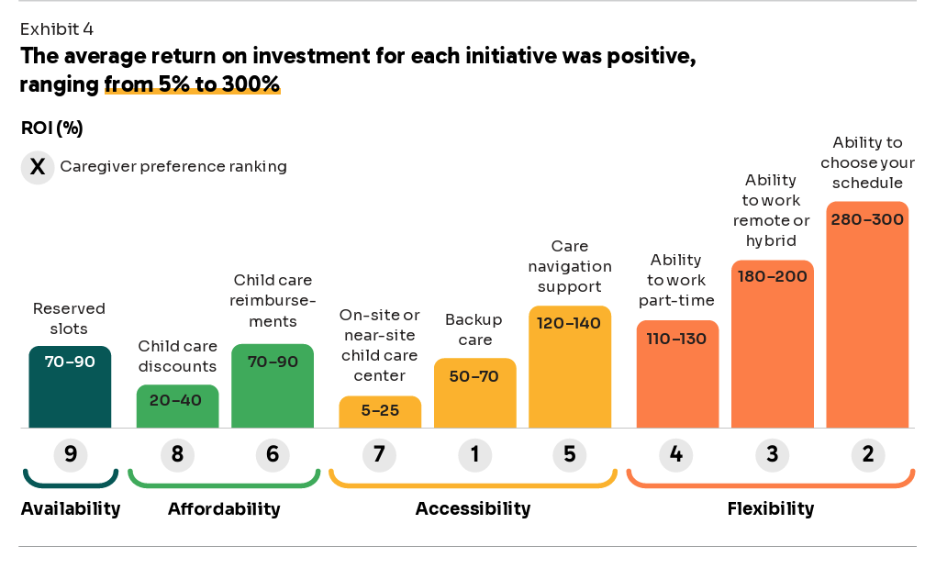
Ensuring access to high-quality child care isn’t charity — it’s a return on investment. Employer-led child care interventions, benchmarked across categories like backup care, reimbursements, on-site care, and schedule flexibility, showed positive ROI in every category studied, ranging from about 5% to nearly 300%, with individual companies reporting returns as high as 425%.
Employers have many options to support their employees with children, including investing in child care for their workforce and possibly receiving substantial tax benefits. Take the Best Places for Working Parents survey now to learn more about what employers can do.
The businesses that make Summit County’s economy run — the hotels, schools, restaurants, hospitals, and shops that keep this community and its visitors served — are staffed overwhelmingly by exactly the workers the child care crisis affects most. Employers who treat child care support as workforce infrastructure, rather than a personal problem, will be well positioned to capture the upside of investing in child care.