The Shirken Family’s Strategic, Multigenerational Approach to Giving
For Brian and Kirsten Shirken, philanthropy isn’t just about generosity. It’s about solving problems.

Their connection to Park City began, like many others, on the slopes. A shared love of skiing brought them to the community, first as visitors, then as homeowners, and eventually as deeply rooted members of the community.
“We had been coming here for years,” Brian says. “At some point, we realized we wanted a place, not just to stay, but to build something lasting. We were introduced to the idea of creating a home in which our kids, relatives, and friends would always feel welcome. And that’s exactly what happened.”
Over time, that sense of place deepened. What started as a second home became a community they fell in love with, and ultimately one they felt responsible for shaping and strengthening. The Shirkens had long been engaged philanthropists in Los Angeles, but as they spent more time in Park City, they saw an opportunity to approach their giving differently.
“In a large city, you can make an impact, but it’s often incremental,” Brian says. “Here, the scale is different. You can actually solve problems.”
That belief became central to how they give. Rather than simply responding to needs, they began asking bigger questions. What are the root causes of the issues in the community? What would it take to truly fix them? And who needs to be involved in making it happen?
Their introduction to Park City Community Foundation helped bring those questions into focus.
When they first connected with the Community Foundation, they came with a clear interest in supporting immigrant communities. Through conversation and local insight, those interests led them to one of Park City’s most pressing challenges: access to early childhood education.
Working alongside the Community Foundation, the Shirkens helped fund and create Early Childhood Alliance with local partners and helped develop a multi-year strategy to expand access to affordable, high-quality childcare. What began as a funding opportunity evolved into a long-term, systems-level effort.
Through Kirsten’s lens, that type of strategic thinking and planning is especially effective because of how intimate and interconnected the community really is.
“In a place like Park City, you can actually see how one system intersects another system,” she says. “For example, if local families don’t have access to childcare, they can’t go to work. And in our resort community, if the people who make up the primary service economy of our resort industry can’t go to work, our resorts and guest experience suffer. Our local economy simply doesn’t function if people can’t show up to work. It’s all part of a large circle.”
For more than 30 years, the Shirkens have used a Donor Advised Fund (DAF) to guide their giving. For them, it is not just a tool. It is a way to give more intentionally.
“It allows us to think long-term,” Brian says. “We can plan multi-year investments, evaluate opportunities thoughtfully, and be more strategic about where and how we give.”
To support this approach, they have also formalized how decisions are made. With support from the Community Foundation, they have built a governance structure, which includes advisors and their children to guide their giving. This structure helps them prioritize issues, evaluate impact, and ensure consistency over time.
But the Shirken’s believe that philanthropy is not only about financial contributions.
“We engage, we bring our experience, our skills, our time, and our networks to help build solutions,” Brian explains.
In addition to the Shirken’s work with the Early Childhood Alliance, Kirsten has been actively involved with the Community Foundation’s Climate Fund and Zero Food Waste initiative. She sits on the Climate Fund steering committee and has been instrumental (along with Columbus Pacific Development) in piloting food waste collection and promoting the Zero Food Waste initiative to the management teams at Slopeside Village employee housing and the Hyatt Centric Hotel.
A few years ago, Brian and Kirsten began introducing their children, now in their twenties, to their philanthropic work. They were thoughtful about how and when to do it.
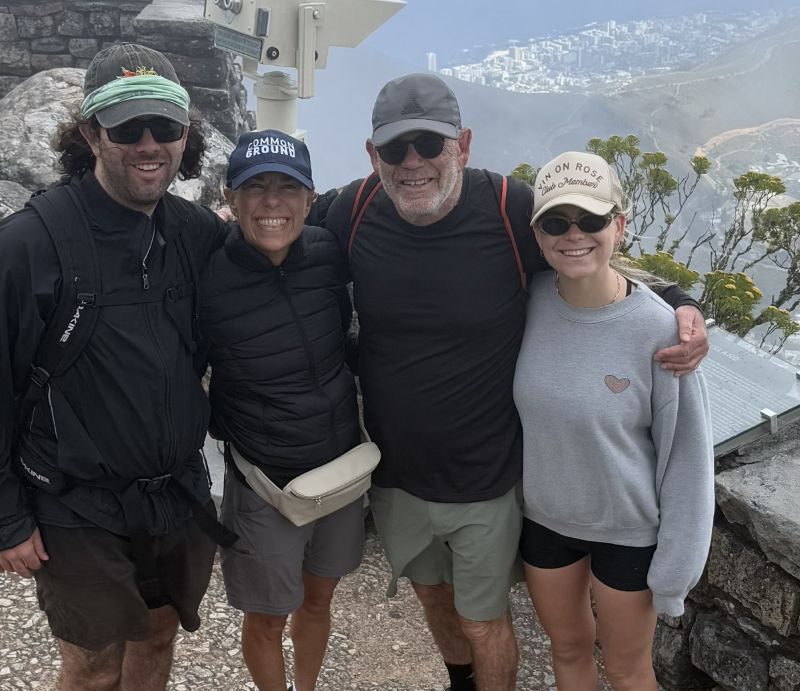
“We didn’t want it to feel like a burden,” Kirsten says. “We wanted them to develop their own interests and come to it when they were ready.”
Today, that involvement is becoming more structured and intentional. Their children are on the advisory committee for their donor advised fund, joining meetings, hearing directly from organizations, and beginning to explore where they want to focus.
“It’s about modeling what thoughtful giving looks like,” Brian says. “There are so many important causes. You can’t do everything. So how do you decide? How do you prioritize? That’s what we want them to learn.”
Looking ahead, Brian and Kirsten see philanthropy playing an even greater role in their lives.
“We’ll be able to devote more time, and we plan to give more away,” Brian says. “Our goal is to do that during our lifetime and then position our kids to continue that work.”
Their approach remains grounded in discipline and intention.
“Giving meaningfully is not easy,” Kirsten reflects. “At the end of the day, you want to know that what you’re supporting is truly making a difference. Having the right partners and the right framework is a big part of the key to success.”
For the Shirkens, that means continuing to go deeper, investing in long-term solutions, strengthening partnerships, and expanding their impact while staying rooted in the community they care deeply about.
Their story reflects a broader shift in modern philanthropy. It is not just about generosity. It is about strategy. It is not just about funding. It is about solving real problems. And increasingly, it is about bringing the next generation along in a meaningful way.
In Park City and Summit County, where challenges are visible and collaboration is possible, that approach has the power to create lasting change for generations to come.